


Artificial intelligence (AI) has become a transformative force across various industries, and the realm of Smart TV PCBA (Printed Circuit Board Assembly) is no exception. As a dedicated Smart TV PCBA Assembly supplier, I've witnessed firsthand how AI technologies are revolutionizing the production and functionality of Smart TV PCBA. In this blog, I'll delve into the diverse applications of AI in Smart TV PCBA Assembly, exploring how it enhances efficiency, quality, and user experience.
Quality Control and Inspection
One of the most critical aspects of Smart TV PCBA Assembly is ensuring the quality of the final product. Traditional inspection methods often rely on human operators, which can be time - consuming, error - prone, and inconsistent. AI - powered inspection systems have emerged as a game - changer in this area.
Machine learning algorithms can be trained to recognize various defects on PCBs, such as soldering issues, component misplacements, and short circuits. These algorithms analyze high - resolution images of the PCBA taken by cameras during the assembly process. For example, convolutional neural networks (CNNs) are particularly effective in image recognition tasks. They can quickly and accurately detect even the smallest defects that might be overlooked by human inspectors.
By using AI for quality control, we can significantly reduce the number of defective products reaching the market. This not only improves customer satisfaction but also saves costs associated with product recalls and rework. Moreover, AI - based inspection systems can provide real - time feedback to the assembly line, allowing for immediate adjustments to the manufacturing process.
Predictive Maintenance
In a Smart TV PCBA Assembly facility, the smooth operation of equipment is crucial for maintaining production efficiency. Unplanned equipment downtime can lead to delays and increased costs. AI enables predictive maintenance, which helps in identifying potential equipment failures before they occur.
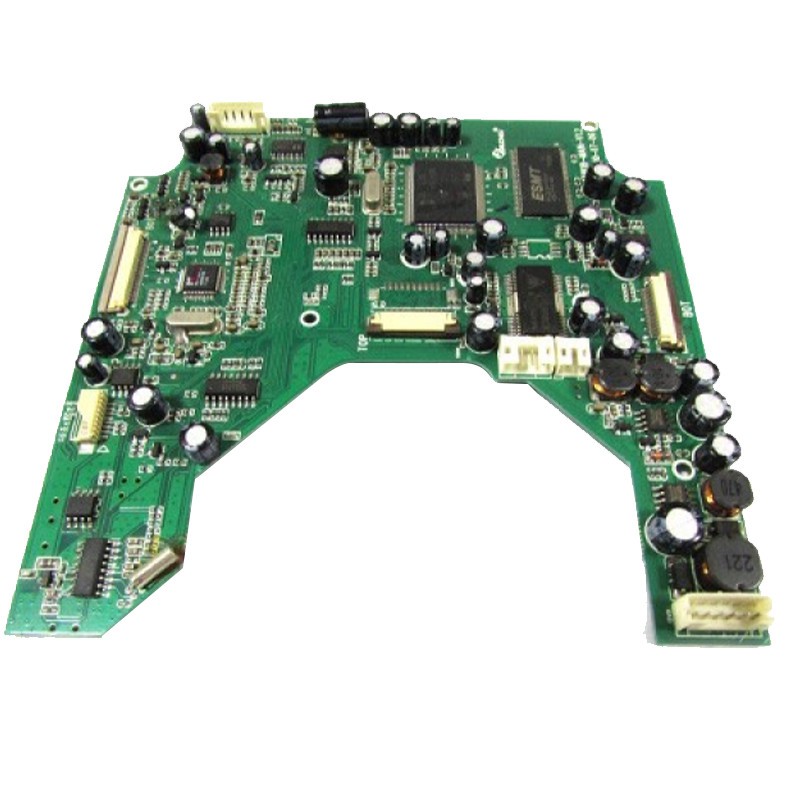

Sensors installed on the assembly machines collect data on various parameters such as temperature, vibration, and power consumption. Machine learning models analyze this data to detect patterns that indicate impending equipment problems. For instance, an increase in vibration levels might suggest a loose component in a pick - and - place machine.
By predicting equipment failures in advance, we can schedule maintenance activities during planned downtime, minimizing disruptions to the production process. This approach also extends the lifespan of the equipment, reducing the need for frequent replacements.
Process Optimization
AI plays a vital role in optimizing the Smart TV PCBA Assembly process. There are numerous variables involved in the assembly process, such as component placement speed, soldering temperature, and conveyor belt speed. Finding the optimal settings for these variables can be a complex and time - consuming task.
AI algorithms can analyze historical production data to identify the relationships between different process parameters and the quality and efficiency of the assembly. For example, genetic algorithms can be used to search for the best combination of settings that maximize production throughput while maintaining high - quality standards.
In addition, AI can adapt to changes in the production environment in real - time. If there is a sudden change in the type of components being assembled or the production volume, the AI system can adjust the process parameters accordingly. This flexibility ensures that the assembly line operates at peak efficiency under various conditions.
Component Placement
Accurate component placement is essential for the proper functioning of Smart TV PCBs. AI - enabled robots are increasingly being used in the component placement process. These robots are equipped with advanced vision systems and machine learning algorithms that allow them to precisely place components on the PCB.
The vision systems can detect the position and orientation of the components and the PCB with high accuracy. Machine learning algorithms then calculate the optimal path for the robot to pick up and place the components. This results in faster and more accurate component placement compared to traditional methods.
Moreover, AI - enabled robots can learn from past experiences. If a particular component placement causes issues, the robot can adjust its behavior in subsequent placements. This continuous learning process improves the overall quality of the component placement over time.
Smart TV Functionality Enhancement
Beyond the assembly process, AI also has a significant impact on the functionality of Smart TVs. Smart TV PCBA is the heart of the TV, and integrating AI technologies into the PCBA can enhance the user experience.
For example, AI - powered voice recognition allows users to control the TV using voice commands. This technology can understand natural language and perform various functions such as changing channels, adjusting the volume, and searching for content. AI can also analyze user viewing habits to provide personalized content recommendations. By understanding what shows and movies a user likes, the Smart TV can suggest similar content, increasing user engagement.
In addition, AI can be used for image and video processing on the Smart TV. It can enhance the picture quality by upscaling low - resolution content, reducing noise, and improving color accuracy. This makes the viewing experience more immersive and enjoyable for the users.
Integration with Other Consumer Electronics PCBA
As a Smart TV PCBA Assembly supplier, we also see the potential for integrating AI across different consumer electronics PCBA products. For example, Smart Speaker PCBA and Smartphones Motherboard PCBA can benefit from similar AI applications.
The same AI algorithms used for quality control in Smart TV PCBA Assembly can be applied to other consumer electronics PCBA. This allows for a more standardized and efficient quality assurance process across different product lines. Moreover, the knowledge and experience gained from developing AI - enabled Smart TV PCBA can be transferred to other products, such as Laptop PCBA Assembly.
Conclusion
The applications of AI in Smart TV PCBA Assembly are vast and far - reaching. From improving quality control and predictive maintenance to enhancing the functionality of Smart TVs, AI is transforming the way we manufacture and use Smart TV PCBA. As a Smart TV PCBA Assembly supplier, we are committed to leveraging the latest AI technologies to provide our customers with high - quality, efficient, and innovative products.
If you are interested in learning more about our Smart TV PCBA Assembly services or exploring how AI can benefit your Smart TV products, we encourage you to reach out to us for a procurement discussion. We look forward to collaborating with you to bring the next generation of Smart TV technology to the market.
References
- Arbib, Michael A. The Handbook of Brain Theory and Neural Networks. MIT Press, 2003.
- Mitchell, Tom M. Machine Learning. McGraw - Hill, 1997.
- Russel, Stuart, and Peter Norvig. Artificial Intelligence: A Modern Approach. Pearson, 2020.


