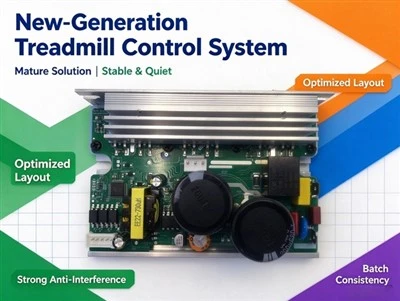
Many machine builders face a common headache when older equipment stays in service long after original component suppliers discontinue spare control boards. We ran into exactly this situation with one European machinery partner early last year. Their field units kept returning because mechanical adjustment dials wore down, setpoints would shift slowly with vibration and temperature changes, and on‑site technicians had no simple way to recalibrate without opening service tickets. They reached out hoping we could deliver a drop‑in replacement populated board that reused their current cabinet housing.
Instead of copying the old dial‑based circuit, the engineering team moved all parameter configuration onto tactile push‑buttons paired with individual digital readouts. Every channel gets its own display so workshop staff can view real‑time setting values directly on the board surface, no extra human‑machine interface hardware required. Component choices responded directly to shop‑floor reality. We selected long‑life tactile buttons rated for heavy repeated pressing, large‑value electrolytic capacitors with elevated temperature grade for power input filtering, and open‑collector transistor outputs to drive external contactors or small actuators. Modbus RTU connection pads are reserved on rear terminal block for teams wanting later PLC integration, though base firmware does not enable that remote function by default.
Prototype validation uncovered practical problems you will rarely see from simulation only. When running non‑stop burn‑in at elevated temperature, nearby power‑supply traces created tiny reading offset across a couple display channels. This could create measurable deviation for timing or threshold values after weeks of running. The issue got resolved by re‑routing high‑current power traces further away from signal lines on revision‑A hardware. Physical fit also mattered a great deal, every mounting hole position matches original enclosure layout, so customers avoid cabinet cutting or re‑drilling during retrofit installation.
Real‑world deployment shows this populated board fits multiple scenarios. It works well as multi‑zone timing control for small thermal treatment equipment, local parameter setting hardware for packaging auxiliary machines and standalone workshop test fixtures. Integrators frequently pick this assembly when full new hardware redesign represents too much cost risk for moderate‑volume retrofit projects. We still receive occasional minor firmware adjustment requests after shipment, mostly fine‑tuning channel logic for unique on‑site actuator timing requirements.